Dogs with the Highest IQ
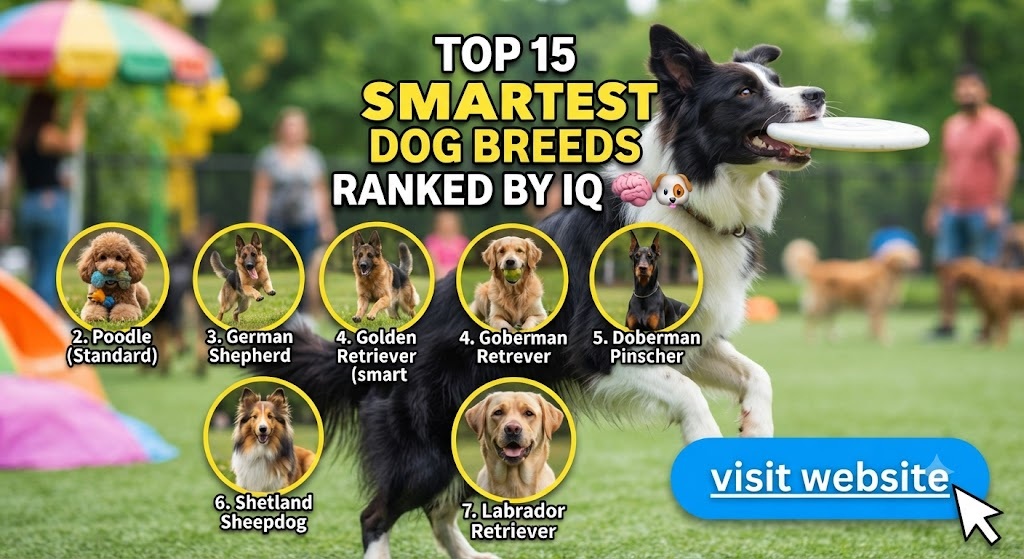
The Canine Einsteins: Unveiling the Dogs with the Highest IQ
In the vast kingdom of domesticated animals, dogs hold a special place not just as companions, but as cognitive wonders. We often find ourselves marveling at their ability to sense our moods, find hidden treats, or navigate complex environments. But have you ever wondered where your furry friend sits on the intellectual ladder? While every dog is a “good boy” or “good girl,” some breeds possess a cognitive processing power that rivals that of a human toddler.
In the world of canine psychology, intelligence isn’t just about how many tricks a dog can do. It is a multifaceted trait encompassing problem-solving, social awareness, and instinctive drive. This comprehensive guide dives deep into the elite world of the smartest dog breeds on the planet, exploring the science of dog IQ and what it truly means to live with a four-legged genius.
Decoding Dog Intelligence: The Stanley Coren Method
To rank dog intelligence, we must first understand how it is measured. Most modern rankings are based on the groundbreaking work of Dr. Stanley Coren, a professor of psychology and canine researcher at the University of British Columbia. In his seminal book, The Intelligence of Dogs, Coren identified three distinct types of canine intelligence:
- Instinctive Intelligence: What the dog was bred to do (herding, fetching, guarding).
- Adaptive Intelligence: What the dog learns for itself (problem-solving, learning from its environment).
- Working and Obedience Intelligence: The ability to learn from humans (following commands).
The “Top 10” lists we see today primarily focus on Working and Obedience Intelligence, as this is the most measurable metric. According to Coren, the smartest dogs can learn a new command in fewer than five repetitions and obey the first command given 95% of the time or better.
The Elite Ten: The Smartest Dog Breeds in the World
These are the Rhodes Scholars of the dog world. They don’t just learn commands; they anticipate them.
1. The Border Collie: The Undisputed King
If there were a Nobel Prize for dogs, the Border Collie would win it every year. Originating from the border country between Scotland and England, this breed was developed to be the ultimate sheepdog.
- Why They Are Smart: Their focus is legendary. A Border Collie possesses a “stare” that can intimidate cattle and sheep into moving exactly where they want.
- The Einstein Moment: Meet Chaser, a Border Collie who knew the names of over 1,000 objects. She could even use “inferential reasoning”—if asked to find a toy she didn’t know the name of, she would find the one toy in the pile she didn’t recognize, concluding it must be the one the owner was asking for.
- Living with One: Be warned: a bored Border Collie is a destructive Border Collie. They require “jobs,” whether it’s agility training, complex fetch games, or advanced trick training.
2. The Poodle: The Intellectual Underestimated
Don’t let the fancy haircuts fool you. Beneath that curly coat lies one of the sharpest minds in the animal kingdom. Originally bred as water retrievers (not lap dogs!), Poodles are incredibly agile and mentally fast.
- Why They Are Smart: Poodles are highly observant. They excel at reading human body language and can be trained for almost any task, from hunting to circus performance.
- The Advantage: Unlike the Border Collie, Poodles often have a “sense of humor” and are highly motivated by social interaction.
- Varieties: Whether Toy, Miniature, or Standard, the intelligence remains consistent across the sizes.
3. The German Shepherd: The Tactical Genius
The German Shepherd is the gold standard for police and military work worldwide for a reason. They possess a unique blend of intelligence, courage, and “biddability” (the willingness to follow orders).
- Why They Are Smart: They excel at “Tactical Intelligence.” A German Shepherd can assess a situation, identify a threat, and act on a command with surgical precision.
- Versatility: They serve as guide dogs for the blind, search and rescue heroes, and elite protectors. Their ability to learn complex, multi-step tasks makes them irreplaceable in high-stakes environments.
4. The Golden Retriever: The Emotional Savant
While often seen as the “doofy” family dog, the Golden Retriever is actually a cognitive powerhouse. Their intelligence is rooted in their intense desire to please their owners.
- Why They Are Smart: Goldens rank exceptionally high in social and emotional intelligence. They are experts at navigating human social structures.
- The Helper: This breed is the top choice for service and therapy work because they can learn to perform hundreds of tasks to assist people with disabilities, from opening doors to sensing an oncoming seizure.
5. The Doberman Pinscher: The Alert Strategist
Dobermans were originally bred by a German tax collector for protection. Because of this, they are hardwired to be alert, fast, and intellectually sharp.
- Why They Are Smart: They have a high “Adaptive Intelligence.” They can differentiate between a friend and a foe in seconds and are known for their ability to anticipate a trainer’s next move.
- Training Tip: They respond best to positive reinforcement and clear leadership. Without a strong “alpha” figure, they might try to outsmart their owners.
6. The Shetland Sheepdog (Sheltie): The Mini-Mastermind
The Sheltie is often mistaken for a small Collie, and in terms of brains, it’s a fair comparison. These “shadow dogs” are incredibly sensitive to their surroundings.
- Why They Are Smart: They are exceptionally fast learners and are highly attuned to the human voice. They can detect tiny changes in your tone and react accordingly.
- Performance: They are stars in the world of competitive obedience and dog sports like Flyball.
7. The Labrador Retriever: The Practical Learner
The most popular dog in America for decades is also one of the smartest. Labs are bred to be “gentle-mouthed” retrievers, which requires significant self-control and focus.
- Why They Are Smart: Labs are highly motivated by food and praise, making them some of the easiest dogs to train. Their intelligence is “practical”—they learn things that make their lives (and yours) easier.
- Skill Set: From detecting explosives to being the perfect family companion, their mental flexibility is their greatest asset.
8. The Papillon: The Tiny Titan
The only “Toy” breed in the top ten, the Papillon proves that size has nothing to do with IQ. These “butterfly dogs” are far from being simple lap ornaments.
- Why They Are Smart: They are famously described as “big dogs in small bodies.” They are tougher, stronger, and much smarter than they look.
- Surprising Fact: Papillons often win agility trials against much larger dogs because they can process commands and navigate obstacles at breakneck speeds.
9. The Rottweiler: The Confident Protector
Rottweilers are often misunderstood due to their size and strength, but they are incredibly intelligent and deeply loyal.
- Why They Are Smart: They are thinking dogs. A Rottweiler doesn’t just react; it evaluates. This breed was once used as “drovers,” responsible for moving cattle and guarding money for traveling merchants.
- Temperament: They require consistent mental stimulation. When well-trained, they are remarkably calm and perceptive.
10. The Australian Cattle Dog: The Independent Problem Solver
Bred to herd cattle across vast distances in the harsh Australian outback, these dogs are the “tough guys” of the high-IQ list.
- Why They Are Smart: They possess incredible “Adaptive Intelligence.” In the outback, they often have to work away from their owners, meaning they have to make their own decisions to keep the herd in line.
- Energy Levels: This is not a dog for a sedentary lifestyle. They need to solve puzzles and stay active to be happy.
The “Excellent” Tier: Breeds that Just Missed the Top 10
While the top ten get most of the glory, several other breeds fall into the “Excellent Working Dogs” category. These dogs typically learn a new trick in 5 to 15 repetitions.
- Pembroke Welsh Corgi: Don’t let the short legs fool you; they are brilliant herders with a sharp wit.
- Miniature Schnauzer: Spirited, friendly, and very quick to learn home boundaries.
- English Springer Spaniel: Known for their focus and ability to follow complex scent trails.
- Belgian Tervuren: Often used in police work in Europe, they are nearly as sharp as German Shepherds.
- Schipperke: Often called the “little black devil,” they are incredibly curious and clever.
Why Some “Smart” Dogs Don’t Rank High
It is important to note that a dog’s ranking on the “Coren List” doesn’t mean other dogs are “stupid.” Some breeds are incredibly smart but lack the Obedience Intelligence that researchers measure.
The Independent Thinkers
Breeds like the Siberian Husky, Afghan Hound, and Basenji are often ranked low on IQ lists. However, these dogs are highly intelligent in an adaptive sense. They were bred to work independently of humans.
An Afghan Hound might understand exactly what you want it to do, but it simply sees no reason to do it. This is often mistaken for lack of intelligence, but in reality, it is a form of cognitive independence. They are the “cats” of the dog world—they know the rules, they just choose to negotiate them.
The Specialists
Bloodhounds and Beagles are scent geniuses. While they might fail a standard obedience test because they get distracted by a smell, their “Olfactory IQ” is off the charts. A Bloodhound’s brain is essentially a massive computer dedicated to processing scent data.
Can You Test Your Dog’s IQ? (The DIY Canine IQ Test)
You don’t need a PhD in animal behavior to get a sense of your dog’s cognitive abilities. Here are four simple tests you can try at home:
1. The Towel Test (Problem Solving)
Gently place a large towel or small blanket over your dog’s head and shoulders.
- The Scoring: If they figure out how to get free in under 15 seconds, they are a genius. 15-30 seconds is average. Over 30 seconds? They might just be happy sitting in the dark.
2. The Hidden Treat (Object Permanence)
Show your dog a treat, then place it under a container (like a plastic cup) while they are watching.
- The Scoring: A high-IQ dog will immediately knock the cup over. A less “academic” dog might look at you and whine, or forget the treat was even there.
3. The Furniture Obstacle (Adaptive Intelligence)
Place a treat under a low piece of furniture (like a sofa) where the dog can see it but can’t reach it with their mouth.
- The Scoring: A smart dog will use their paws to “fish” the treat out. A super-smart dog will try to move the furniture or look at you to use you as a tool to get it.
4. The Recognition Test (Social IQ)
Pick a time when your dog is relaxed. Pick up your car keys and put on your coat without saying a word.
- The Scoring: Does the dog get excited because they know you’re leaving or going for a walk? This shows they can associate sequences of events—a high-level cognitive skill.
The Reality of Owning a High-IQ Dog: It’s Not Always Easy
Most people think they want the smartest dog possible. However, living with a canine Einstein is a full-time job. Here are the challenges of high-intelligence breeds:
1. They Outsmart You
A smart dog will figure out how to open doors, cabinets, and even refrigerators. They will learn that if they bark at the back door, you will get up to let them out, leaving your sandwich unattended on the coffee table.
2. The “Job” Requirement
Smart dogs have high “mental energy.” If you don’t give them a puzzle to solve, they will find their own—usually involving deconstructing your couch or redecorating your garden.
3. Sensitivity
High-IQ dogs are often more sensitive to their environment and their owner’s moods. This can lead to anxiety if the household is chaotic or if they aren’t given clear, consistent boundaries.
4. Manipulation
Yes, dogs can manipulate. A smart dog knows exactly which “look” gets them a treat and how to play family members against each other to get an extra dinner.
How to Increase Your Dog’s IQ
Just like humans, dogs can “learn how to learn.” You can improve your dog’s cognitive function through:
- Interactive Toys: Use puzzle feeders that require the dog to move sliders or spin wheels to get kibble.
- Nose Work: Hide treats around the house and teach them the “find it” command. This engages their most powerful sensory organ.
- New Commands Every Week: Never stop training. Even if they know the basics, teach them the names of their toys or “Left” and “Right” directions.
- Socialization: Exposing your dog to new environments, sounds, and people forces their brain to process new data and adapt.
The Future of Canine Intelligence Research
We are currently in a golden age of dog cognition research. Labs like the Duke Canine Cognition Center and the Family Dog Project in Budapest are discovering that dogs have “Theory of Mind” (the ability to understand that others have different perspectives) and can even understand the difference between intentional and accidental actions.
Researchers are finding that “intelligence” in dogs is much more like human intelligence than we previously thought. It’s not just a single score; it’s a profile of strengths and weaknesses. Some dogs are “social geniuses,” while others are “mechanical geniuses.”
Conclusion: Is a Smart Dog Right for You?
The “smartest” dog isn’t necessarily the “best” dog for everyone. If you want a companion to lounge on the sofa and watch Netflix, a high-IQ Border Collie might drive you crazy. However, if you are looking for a partner for adventure, a competitor for dog sports, or a working partner on a farm, an intelligent breed will change your life.
In the end, every dog possesses a unique form of brilliance. Whether they are solving a complex puzzle or simply knowing exactly when you need a cuddle, their ability to connect with us is the greatest intelligence of all.
Quick Ranking Summary
- Border Collie (Best all-around)
- Poodle (Best for training)
- German Shepherd (Best for protection/work)
- Golden Retriever (Best for families/service)
- Doberman Pinscher (Best for fast learners)
- Shetland Sheepdog (Best small herder)
- Labrador Retriever (Best for versatility)
- Papillon (Best smart small breed)
- Rottweiler (Best for confidence)
- Australian Cattle Dog (Best for problem-solving)
What’s your dog’s IQ? Whether they’re a “Canine Einstein” or just a “Professional Napper,” their bond with you is what truly counts.