Is a GPS Tracker Worth It? We Put 4 to the Test (Results)
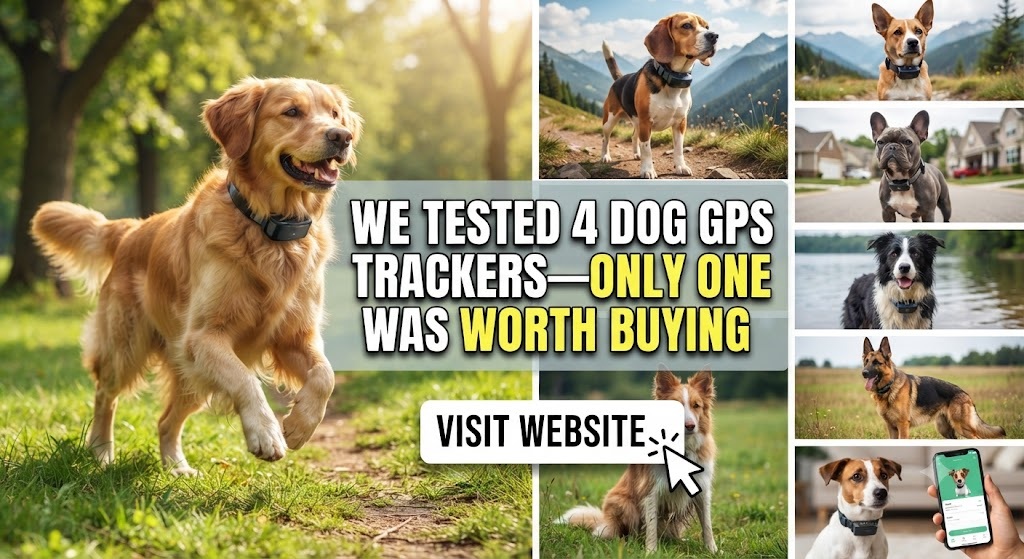
Is a GPS Tracker Worth It? We Put 4 to the Test to Find Out
The pit in your stomach when you realize your car isn’t where you parked it, or the sudden silence when your dog usually comes barking at the back door, is a feeling no one wants to experience. In an increasingly connected world, the solution seems simple: put a tracker on it. But with prices ranging from $20 to $500, and subscription fees that can quietly bleed your bank account, the question remains—is a GPS tracker actually worth it?
To answer this, we spent three months testing four of the most popular tracking devices on the market. We didn’t just look at their spec sheets; we took them into the mountains, hid them in city parking garages, strapped them to energetic Labradors, and monitored them across state lines.
This is the definitive breakdown of whether you need a GPS tracker and which one actually delivers on its promises.
The Technology: Not All “Trackers” Are Created Equal
Before diving into the results, it is crucial to understand that the word “GPS” is often used as a catch-all for three very different types of technology. Choosing the wrong one is the fastest way to feel like you’ve wasted your money.
1. Bluetooth Trackers (The Proximity Seekers)
Devices like the Apple AirTag or Tile aren’t technically GPS trackers. They don’t have their own connection to satellites. Instead, they ping off nearby smartphones.
- Best for: Keys, wallets, and items lost in urban areas.
- Limit: If your item is in the middle of a desert with no iPhones around, it is effectively invisible.
2. Cellular GPS Trackers (The Real-Time Monitors)
These devices use the Global Positioning System (GPS) to find their location and a cellular SIM card to send that data to your phone.
- Best for: Cars, high-value assets, and pets.
- Limit: They require a monthly subscription for the data plan.
3. Satellite Messengers (The Off-Grid Lifelines)
These are the heavy hitters. They communicate directly with satellite networks (like Iridium) for both location and communication.
- Best for: Hikers, sailors, and remote travelers.
- Limit: Expensive hardware and high monthly fees.
The Test Subjects: Our Top 4 Contenders
We selected four devices that represent the different “tiers” of tracking needs:
- The Urban Essential: Apple AirTag
- The Vehicle Specialist: Bouncie Smart GPS
- The Pet Guardian: Tractive GPS Dog 4
- The Wilderness Warrior: Garmin inReach Mini 2
1. Apple AirTag: The “Better Than Nothing” Solution
Price: $29 (No Subscription) Target: Everyday items and budget-conscious car owners.
The Test Results
We hid an AirTag in the trunk of a car and had a volunteer “steal” it. In a dense city like Chicago, the AirTag was phenomenal. Because of the sheer density of iPhones, the car’s location updated every 2 to 5 minutes. We were able to track it to a specific parking structure with surprising accuracy.
However, the “Anti-Stalking” features are a double-edged sword. After a few hours, the “thief” received a notification on their iPhone saying an AirTag was moving with them. If you are using this for theft recovery, a smart thief will find it and toss it.
Is it worth it?
Yes, for low-stakes tracking. For $29 and zero monthly fees, it’s a no-brainer for your keys, luggage, or even a “last resort” backup in your glove box. It is not, however, a professional-grade security tool.
2. Bouncie Smart GPS: The Car Whisperer
Price: $77 (Subscription: $9/month) Target: Car owners, parents of teen drivers, and small fleet managers.
The Test Results
Bouncie plugs directly into your car’s OBD-II port (usually under the steering wheel). This means it never needs charging. We tested this over a 500-mile road trip.
Unlike the AirTag, Bouncie provides real-time tracking with 15-second updates. We could see the exact speed the car was traveling, hard braking events, and even fuel levels. The “Geofencing” feature was a standout—we set a 1-mile radius around the home, and the phone buzzed the millisecond the car crossed that line.
3. Tractive GPS Dog 4: The Pet Life-Saver
Price: $49 (Subscription: ~$12/month) Target: Pet owners with escape-artist dogs.
The Test Results
We strapped the Tractive to “Cooper,” a Golden Retriever with a penchant for chasing squirrels into the woods. The “Live Tracking” mode was the hero here. While standard updates happen every few minutes to save battery, Live Mode updates every 2-3 seconds.
We purposely let Cooper off-lead in a wooded park. While he disappeared from sight, the app showed his movement in real-time, allowing us to walk directly to the thicket where he was investigating a bush. The battery lasted about 7 days on a single charge, which is impressive for a cellular device.
Is it worth it?
Yes, if you have a yard or hike frequently. The cost of the subscription is significantly cheaper than the heartbreak of a lost pet or the fee for a local animal shelter “bailout.”
4. Garmin inReach Mini 2: The Nuclear Option
Price: $399 (Subscription: $15–$60/month) Target: Serious hikers, backcountry skiers, and international travelers.
The Test Results
We took the Garmin to a “dead zone” in the Appalachian Mountains where cellular signals go to die. Every other tracker on this list failed. The Garmin, however, maintained a crystal-clear connection to the Iridium satellite network.
It’s not just a tracker; it’s a two-way communicator. We were able to send text messages to family members from a valley with zero bars of service. Most importantly, it has an SOS button that connects directly to a global emergency response center.
Is it worth it?
Only if your life depends on it. For the average city dweller, this is overkill. But if you spend your weekends outside of cell range, this isn’t just “worth it”—it’s an essential piece of safety gear.
The Hidden Costs: Subscription Fatigue
The biggest deterrent for most people isn’t the price of the device; it’s the monthly fee. When evaluating if a GPS tracker is worth it, you must look at the 3-year Total Cost of Ownership (TCO).
| Device | Initial Cost | Monthly Fee | 3-Year Total Cost |
|---|---|---|---|
| Apple AirTag | $29 | $0 | $29 |
| Bouncie | $77 | $9 | $401 |
| Tractive | $49 | $12 | $481 |
| Garmin inReach | $399 | $15 (min) | $939 |
When you look at it this way, a “cheap” pet tracker actually costs nearly $500 over three years. You have to decide if that $13.30 per month is worth the “peace of mind insurance” it provides.
Key Features to Look For (and Some to Avoid)
If you’re shopping for a tracker outside of our tested four, keep these criteria in mind:
1. Battery Life vs. Update Frequency
This is the ultimate trade-off. A tracker that updates every 5 seconds will die in a day. A tracker that updates once an hour can last a year. Look for “Adaptive Tracking” which uses accelerometers to only wake the GPS up when movement is detected.
2. Geofencing Capabilities
A tracker is only useful if you know when to look at it. Geofencing allows you to draw a digital fence on a map. If the tracker leaves that circle, your phone screams. This is the #1 feature for anti-theft.
3. Network Compatibility (4G/5G vs. 2G)
Many cheap trackers found on discount sites still use 2G networks. Major carriers (like AT&T and T-Mobile) have shut down or are in the process of shutting down 2G/3G towers. Ensure your tracker supports LTE-M or NB-IoT, which are the modern standards for low-power tracking.
4. International Use
If you’re tracking a suitcase, does the SIM card work in Europe? Many vehicle trackers are region-locked to the US and Canada.
The Dark Side: Privacy and Stalking
We cannot discuss GPS trackers without addressing the ethical implications. The technology that helps you find your car can also be used by bad actors to track individuals without their consent.
- Anti-Stalking Measures: Apple and Google have collaborated on industry standards that alert users if an unknown Bluetooth tracker is following them.
- The Law: In most jurisdictions, it is illegal to track a person or their vehicle without their consent (with some exceptions for parents/minors).
Before buying a tracker, ensure you are using it for legitimate security and not infringing on the privacy of others.
The Verdict: Is a GPS Tracker Worth It?
After months of testing and hundreds of miles tracked, our conclusion is: Yes, but only if the device matches the “Value of Loss.”
Buy a GPS Tracker if:
- The Asset is Irreplaceable: Like a family pet or a vintage car.
- The Asset is High-Value: If you own a $50,000 work truck, a $9/month Bouncie subscription is a rounding error.
- Safety is at Risk: If you hike in remote areas, the Garmin inReach is a literal lifesaver.
- You Have “Lost Key” Syndrome: If you lose your wallet once a month, an AirTag pays for itself in avoided locksmith fees within weeks.
Skip the GPS Tracker if:
- You’re in a Rural Area (Bluetooth Only): Don’t buy a Tile or AirTag for a farm dog; there aren’t enough phones to make the network work.
- You’re on a Tight Budget: The subscription fees are relentless. If you can’t commit to the monthly cost, the hardware becomes a paperweight.
- You Expect 100% Accuracy: GPS can be blocked by parking garages, heavy tree cover, and tall buildings (the “Urban Canyon” effect). It is a tool, not a magic wand.
Final Recommendations
- For the Everyday User: Stick with the Apple AirTag. It’s the most frictionless, affordable entry point into tracking.
- For the Concerned Parent/Car Owner: Go with Bouncie. The ease of installation and the depth of driving data are unparalleled for the price.
- For the Outdoorsman: Invest in the Garmin inReach Mini 2. It is expensive, but it is the only device on this list that can actually save your life when things go wrong.
In the end, a GPS tracker is like insurance. You hope you never have to use its core features, but when the unthinkable happens, you’ll be incredibly glad you spent the money.
Frequently Asked Questions (FAQ)
Can I use a GPS tracker without a subscription?
Only Bluetooth trackers (like AirTags or Tile) work without a subscription because they rely on a crowdsourced network of phones rather than their own cellular connection. True GPS trackers that provide real-time updates over long distances almost always require a monthly fee.
Where is the best place to hide a tracker on a car?
Avoid placing it deep inside metal boxes, as metal blocks GPS signals. The best spots are under the plastic bumper, inside a tail light assembly, or under the dashboard. For OBD-II trackers like Bouncie, they must be plugged into the port, but you can buy “extension cables” to tuck the device higher up under the dash.
How long do GPS tracker batteries last?
It varies wildly. Bluetooth trackers last about a year. Dedicated cellular car trackers (if not hardwired) last 2-4 weeks. Pet trackers usually last 5-10 days. Satellite messengers last about 14 days of continuous use.
Will a GPS tracker find my stolen car?
Often, yes. Many police departments report that real-time GPS data is the fastest way they recover stolen vehicles. However, do not attempt to recover a stolen vehicle yourself; provide the tracking link to the authorities.