Crate Training: 7 Mistakes That Turn It Into a Prison
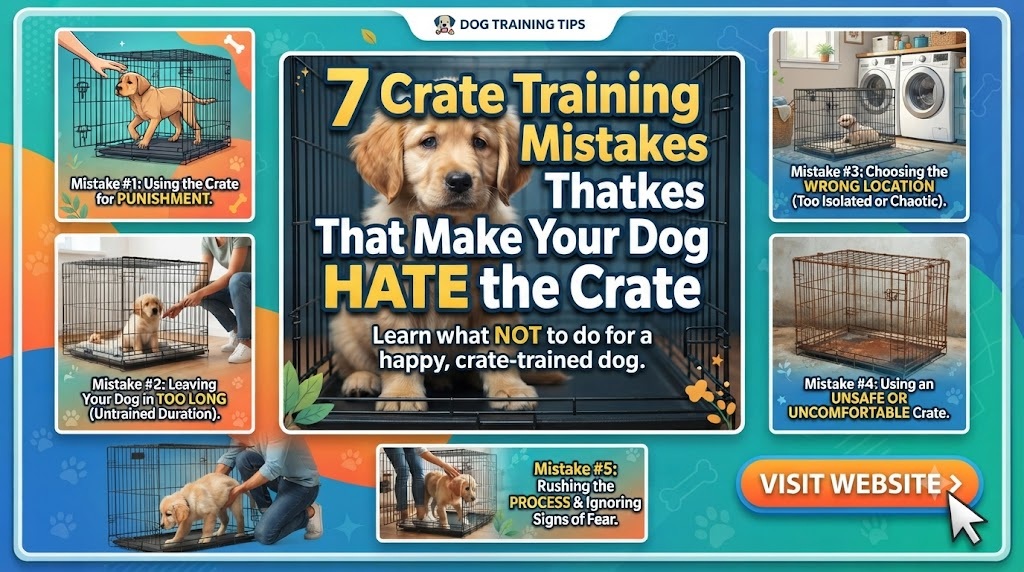
Crate Training: 7 Critical Mistakes That Turn Your Dog’s Den Into a “Prison”
To the uninitiated, a dog crate looks like a cage. To a well-trained dog, it is a sanctuary—a private bedroom where they can retreat from the chaos of the household, sleep soundly, and feel completely secure. This transition from “metal box” to “safe haven” is the core objective of crate training.
However, when crate training goes wrong, it doesn’t just fail to work; it can become a source of significant psychological trauma for your pet. Instead of a den, the crate becomes a prison. This leads to “barrier frustration,” separation anxiety, self-harm, and a breakdown of the bond between you and your dog.
If you are struggling with a dog that howls the moment the door shuts, or if you are just starting the journey with a new puppy, understanding the common pitfalls is essential. Here are the 7 critical mistakes that turn crate training into a nightmare, and the professional strategies you need to avoid them.
1. Using the Crate as a Tool for Punishment
This is the cardinal sin of crate training. It is the fastest way to transform a sanctuary into a jail cell.
Imagine you are a child, and your bedroom—the place you love to sleep and play—is suddenly where you are sent every time you make a mistake. Soon, you will begin to associate your bed with feelings of guilt, fear, and social isolation.
The Negative Association Trap
When a dog does something “wrong”—chews a shoe, has an accident on the carpet, or barks at the mailman—the owner’s immediate reaction is often to shout “Go to your crate!” and shut the door.
From the dog’s perspective:
- They were reprimanded (scary).
- They were physically isolated (lonely).
- The door was locked (trapped).
When you use the crate for “time-outs,” your dog learns that the crate is a place where “bad things happen” or where “the fun ends.” Once that negative association is formed, the dog will begin to resist entering the crate even when you need them to go in for positive reasons, like bedtime or when you leave the house.
The Fix: Keep it Neutral or Positive
The crate should be a “neutral zone” at worst and a “pleasure zone” at best. If your dog misbehaves, use a different form of correction or a short time-out in a boring, non-crate area like a laundry room or behind a baby gate. The crate must remain a “No-Conflict Zone.”
2. Choosing the Wrong Size (The “Goldilocks” Problem)
A crate that is the wrong size isn’t just uncomfortable; it’s counterproductive to the primary goals of crate training: safety and housebreaking.
Too Small: The Discomfort Factor
If the crate is too small, your dog cannot stand up fully, turn around, or lie down in a natural position. This leads to cramped muscles and joint pain. If a dog associates the crate with physical pain, they will fight tooth and nail to stay out of it.
Too Large: The “Potty” Problem
Most people think “bigger is better,” but in the world of crate training, this is a mistake. Crate training works because dogs have a natural instinct not to soil where they sleep. If the crate is massive, the dog will sleep in one corner and use the other corner as a bathroom. This reinforces the habit of urinating indoors, which defeats the purpose of using the crate for potty training.
1. Using the Crate as Punishment
Why It’s a Mistake
If your dog is sent to the crate only after bad behavior, they’ll associate it with punishment instead of comfort.
Signs
- Refuses to enter the crate
- Runs away when you say “crate”
- Appears fearful or stressed inside
What to Do Instead
- Use treats and praise when your dog enters the crate.
- Feed meals inside the crate.
- Make it a positive, rewarding space.
2. Leaving Your Dog in the Crate Too Long
Why It’s a Mistake
Dogs need exercise, bathroom breaks, social interaction, and mental stimulation. Spending excessive time confined can lead to boredom, anxiety, and frustration.
Signs
- Excessive barking
- Whining
- Destructive chewing
- Hyperactivity after release
Better Approach
- Puppies need frequent potty breaks.
- Adult dogs should not spend excessive hours crated without breaks.
- Balance crate time with walks, play, and training.
3. Skipping Proper Crate Introductions
Why It’s a Mistake
Forcing a dog into a crate before they’re comfortable can create lifelong fear.
Signs
- Refuses to enter
- Pulls away from the crate
- Trembles near it
Better Approach
- Leave the crate door open.
- Toss treats inside.
- Let your dog explore at their own pace.
- Reward every positive interaction.
4. Choosing the Wrong Crate Size
Why It’s a Mistake
A crate that’s too small is uncomfortable, while one that’s too large can make house training more difficult.
Signs
- Difficulty standing or turning around
- Sleeping in one corner and eliminating in another
Better Approach
Choose a crate large enough for your dog to:
- Stand comfortably
- Turn around
- Lie down fully stretched
For growing puppies, consider a crate with an adjustable divider.
5. Ignoring Exercise Before Crate Time
Why It’s a Mistake
A dog with excess energy won’t relax in a crate.
Signs
- Constant barking
- Pawing at the door
- Digging at bedding
- Restlessness
Better Approach
Before crating:
- Take a walk
- Play fetch
- Practice obedience training
- Use puzzle toys for mental stimulation
A tired dog settles much more easily.
6. Making the Crate Uncomfortable
Why It’s a Mistake
An uncomfortable environment discourages your dog from resting peacefully.
Common Problems
- Too hot or too cold
- Poor ventilation
- Hard flooring
- Loud, busy location
Better Approach
Provide:
- Soft bedding (if your dog doesn’t chew it)
- Good airflow
- Fresh water when appropriate
- A quiet location away from constant noise
7. Expecting Instant Success
Why It’s a Mistake
Crate training is a gradual process that requires patience and consistency.
Signs of Rushing
- Closing the door too soon
- Expecting hours of quiet immediately
- Becoming frustrated after setbacks
Better Approach
Increase crate time gradually:
- A few seconds
- A few minutes
- Short periods while you’re home
- Longer sessions over several days or weeks
Reward calm behavior throughout the process.
Bonus Tips for Successful Crate Training
- Keep a consistent daily routine.
- Use special treats reserved for crate time.
- Never force your dog inside.
- Offer safe chew toys to reduce boredom.
- Keep crate experiences calm and positive.
- Cover part of the crate if it helps your dog relax.
- Practice short sessions before longer ones.
Signs Your Dog Loves Their Crate
- Walks into it voluntarily
- Sleeps peacefully inside
- Enters when tired
- Remains calm with the door closed
- Treats it like a personal bedroom
Final Thoughts
A crate should never feel like a prison. With patience, positive reinforcement, and the right training approach, it can become one of the safest and most comforting places in your dog’s life. Avoid these seven common mistakes, and you’ll build trust, reduce stress, and help your dog see the crate as a secure retreat rather than a place to fear
3. Leaving the Dog in the Crate for Too Long
Even the most comfortable “bedroom” becomes a prison if you are locked in it for 12 hours a day. Dogs are social pack animals; they are not designed for prolonged isolation.
The Physical and Mental Toll
When a dog is crated for excessive periods, several things happen:
- Muscular Atrophy: Lack of movement leads to stiff joints and weakened muscles.
- Bladder Distress: Forcing a dog to hold their bladder past their physical limit is agonizing and can lead to UTIs.
- Pent-up Energy: “Crate crazy” is a real phenomenon where a dog explodes with manic energy the moment they are released because they have been suppressed for too long.
- Depression: Chronic isolation leads to lethargy, loss of appetite, and a “shut down” emotional state.
The Fix: Adhere to Age-Appropriate Limits
A general rule of thumb for puppies is that they can hold their bladder for one hour for every month of age, plus one.
- 2 Months old: 2–3 hours max.
- 4 Months old: 4–5 hours max.
- Adult Dogs: Ideally no more than 6–8 hours, and never consecutively without a long break for exercise and social interaction.
If you work an 8-hour shift, you must hire a dog walker or come home during lunch to break up the crating time.
4. Skipping the “Positive Association” Phase
Many owners bring a crate home, shove the dog inside, lock the door, and walk away. This is a recipe for disaster. This “sink or swim” method creates an immediate panic response.
The “Trapped” Instinct
Dogs are den animals, but they are also animals that require an exit strategy. If a dog is forced into a confined space before they have explored it on their own terms, their “fight or flight” response kicks in. Since they cannot “fly” (escape), they will “fight” by scratching, biting the bars, and howling.
The Fix: The Slow-Burn Introduction
You must “market” the crate to your dog as the best place on Earth.
- Leave the door open: Let them sniff it and walk in and out freely for the first few days.
- The Treat Trail: Drop high-value treats (chicken, cheese) near the entrance, then just inside, then at the very back.
- Mealtime in the Crate: Feed your dog their breakfast and dinner inside the crate with the door wide open.
- The “Jackpot” Toy: Only give them their favorite long-lasting chew (like a frozen peanut butter Kong) when they are inside the crate.
By the time you finally close the door, the dog should be so busy enjoying their treats that they hardly notice.
5. Giving In to Every Whine and Cry
This is the most difficult mistake for dog owners to avoid because it tugs at the heartstrings. However, responding incorrectly to crate crying is the fastest way to train your dog to be a master manipulator.
The Reward of Attention
If your puppy starts whining and you immediately go to the crate, talk to them, or let them out, you have just taught them a very powerful lesson: “Noise = Freedom.” Once a dog learns that barking or crying results in the door opening, they will increase the volume and duration of their crying every time they are crated. This can escalate into “demand barking” that lasts for hours.
The Fix: The “Silence for Service” Rule
You must wait for a “gap” in the noise. Even if it is only five seconds of silence, that is the moment you open the door. This teaches the dog that calmness and silence are the keys that unlock the door.
The Exception: You must learn to distinguish between a “I’m bored” whine and a “I’m about to have an accident” whine. If a previously quiet dog suddenly starts barking frantically, they likely need a potty break. Take them out on a leash, give them a boring “business-only” bathroom break, and put them right back in the crate. No play, no cuddles, no treats.
6. Lack of Exercise and Mental Stimulation Before Crating
The crate is meant for rest. If you put a “high-battery” dog into a crate without draining their energy first, you are asking for a rebellion.
The “Pressure Cooker” Effect
Imagine drinking three cups of coffee and then being told to sit perfectly still in a small closet. You would feel anxious, jittery, and frustrated. This is exactly how an unexercised dog feels in a crate. Many “crate anxiety” cases are actually just cases of “excess energy” with nowhere to go.
The Fix: Drain the Tank
Before your dog goes into the crate for a long stretch, they need a “Triple Burn”:
- Physical Burn: A brisk walk, a game of fetch, or a run.
- Mental Burn: 10 minutes of obedience training or a puzzle toy.
- Olfactory Burn: Letting them sniff and explore the world. Sniffing for 10 minutes is as exhausting for a dog as running for 30 minutes.
A tired dog will see the crate as a welcome relief—a place to finally take a nap. An energized dog will see it as a barrier to their fun.
7. Poor Placement and Environmental Neglect
Where you put the crate and what you put inside it can make the difference between a cozy den and a sensory-deprived dungeon.
The Social Isolation Factor
Many people put the crate in the basement or the garage so they don’t have to hear the dog’s movement. Dogs are social creatures. Being banished to a remote part of the house feels like a rejection from the pack. This increases anxiety and makes the crate feel like a place of exile.
The Temperature and Safety Hazard
Putting a crate in direct sunlight, next to a roaring fireplace, or in a drafty hallway can lead to overheating or hypothermia. Furthermore, putting “dangerous” bedding (like cheap blankets that can be shredded and swallowed) into a crate with a bored dog can lead to emergency surgery.
The Fix: The “Corner of the Action”
The ideal location for a crate is in a quiet corner of a room where the family spends a lot of time, such as the living room or your bedroom. This allows the dog to feel like they are still part of the “pack” while having their own defined space.
Environment Checklist:
- Comfort: Use a high-quality, chew-resistant crate mat.
- Cover: Many dogs feel more secure if the crate is covered with a light sheet or a dedicated crate cover, mimicking a dark, cave-like den.
- Airflow: Ensure there is plenty of ventilation.
- Sound: Some dogs benefit from white noise or soft classical music to drown out startling neighborhood sounds.
The Anatomy of the Perfect Crate Setup
To ensure your crate is a sanctuary rather than a prison, you need to curate the environment. Here is what a professional-grade crate setup looks like:
The Crate Type
- Wire Crates: Great for ventilation and visibility. Most are foldable and come with dividers. Best for dogs who like to see what’s going on.
- Plastic (Airline) Crates: More enclosed and “cave-like.” Great for dogs who get easily overstimulated by visual movement.
- Furniture-Style Crates: These look like end tables. They are beautiful but usually not recommended for heavy chewers or during the initial training phase.
The “Crate-Only” Specials
To build a positive association, create a list of things your dog only gets when they are in the crate.
- The “Special” Chew: A specific flavor of dental chew or a high-quality bully stick.
- The “Puzzle” Toy: A Kong stuffed with wet food and frozen. This provides 20–30 minutes of “licking” time, which is naturally self-soothing for dogs.
- The “Crate Blanket”: A specific, high-softness blanket that smells like you (toss one of your old t-shirts in there!).
Troubleshooting: How to “Reset” if the Crate is Already a Prison
If you’ve already made some of these mistakes and your dog hates the crate, don’t worry. You can hit the “reset” button. It takes patience, but it is possible to rebrand the crate.
Step 1: Move the Crate
Change the location. Sometimes just moving the crate to a different room can help “break” the old negative associations.
Step 2: Change the Look
If you were using a wire crate, switch to a plastic one (or vice versa). Add a cover if you didn’t use one before. Change the bedding. Make it look and feel like a brand-new space.
Step 3: Open-Door Policy
For one full week, do not close the door. Feed every meal in the crate, play games near the crate, and hide “surprise” treats in the crate for the dog to find randomly throughout the day. Your goal is to make the dog think, “Hey, this place is actually pretty cool.”
Step 4: The “Short Duration” Method
Once the dog is entering voluntarily, start closing the door for literally 5 seconds while you stand right there feeding them treats through the bars. Then open it. Gradually increase to 10 seconds, 30 seconds, 1 minute, etc.
Step 5: The “Out of Sight” Game
Close the door, walk out of the room, and immediately walk back in. Do not wait for them to cry. You want to show them that “you leaving” does not mean “you are gone forever.”
When the Crate Isn’t the Answer: Separation Anxiety vs. Crate Anxiety
It is vital to distinguish between a dog who just hasn’t been crate trained properly and a dog suffering from Severe Separation Anxiety (SA).
- Crate Anxiety: The dog is fine when left alone in a room or a pen, but panics only when the crate door is shut. They feel “trapped.”
- Separation Anxiety: The dog panics whenever they are separated from their owner, regardless of whether they are in a crate, a room, or the backyard.
If your dog is breaking teeth on the bars, bloodying their paws trying to dig out, or drooling so much that the floor is soaked, they likely have SA. In these cases, forcing the crate can be dangerous. You may need to consult a veterinary behaviorist and consider “confinement-free” training or a high-stress dog run.
Crate Training Milestones: A Timeline for Success
To keep yourself on track, use these milestones as a guide for your dog’s progress.
Week 1: Exploration and Meals
- Goal: Dog enters the crate voluntarily for food.
- Action: All meals served in the crate. Door remains open or is closed only for the duration of the meal.
Week 2: Short Durations
- Goal: Dog remains calm for 15–30 minutes with a chew toy.
- Action: You remain in the room or move in and out of the room. The dog should be focused on their toy, not your movement.
Week 3: Leaving the House
- Goal: Dog is crated for 1–2 hours while you run errands.
- Action: Ensure the dog is well-exercised before you leave. Do not make a “big deal” out of leaving or returning.
Week 4 and Beyond: The Sanctuary Phase
- Goal: The dog goes to the crate on their own to take naps.
- Action: You can now use a verbal cue like “Go to bed” or “Kennel up.” The dog understands this is their safe space.
Final Thoughts: The Goal is Freedom
The ultimate irony of crate training is that its purpose is to give your dog more freedom.
A dog that is crate trained can travel with you in the car safely. They can stay at a hotel or a friend’s house without being a nuisance. They can be safely housed at the vet or a groomer without panicking. Most importantly, a crate-trained dog can be trusted in your home because they have learned the boundaries of acceptable behavior and have a place to settle when they feel overwhelmed.
By avoiding these 7 mistakes, you are not “locking up” your dog. You are giving them the gift of a quiet, stress-free home within a home. Stop looking at the crate as a cage, and start building the sanctuary your dog deserves.
Crate training is an investment in your dog’s mental health and your own peace of mind. Do it with patience, do it with kindness, and most importantly, do it with a pile of very high-quality treats.