How to Give a Pill to a Difficult Dog
The Ultimate Guide to Giving a Pill to a Difficult Dog: Stress-Free Strategies for Every Owner
Medicating a difficult dog is one of the most frustrating aspects of pet ownership. Whether it’s a short course of antibiotics or life-saving daily medication, the “battle of the pill” can strain the bond between you and your furry friend. But it doesn’t have to be a war. By understanding canine psychology, mastering a few “sleight of hand” tricks, and knowing the proper physical techniques, you can turn pill time into just another part of the day.
This comprehensive guide covers everything from the “Trojan Horse” food method to manual administration and long-term behavioral training.
Why Is It So Hard? Understanding the Canine “Pill Refusal”
Before we dive into the techniques, we must understand why dogs are so good at detecting and rejecting pills.
1. Superior Olfactory Senses
A dog’s sense of smell is 10,000 to 100,000 times more acute than a human’s. Most pills have a distinct chemical odor that screams “not food” to a dog. Even if you hide it in a piece of steak, they can often smell the medication through the meat.
2. Bitter Taste Receptors
Many canine medications are incredibly bitter. If a dog accidentally bites into a pill once, they develop a “taste aversion.” Their brain catalogs that specific scent and shape as something dangerous or unpleasant, making future attempts much harder.
3. Reading Your Body Language
Dogs are masters at reading human emotions. If you are stressed, hovering, or acting “weird” because you’re nervous about the pill-giving process, your dog picks up on that energy. They assume something bad is about to happen, which triggers their flight-or-fight response.
The “Trojan Horse” Method: Hiding Pills in Food
For most dogs, the best way to administer a pill is to make sure they never know it’s there. This requires more than just dropping a pill into a bowl of kibble.
The Magic of High-Value Rewards
The key to the Trojan Horse method is using food that is so delicious the dog gulps it down without chewing.
- Peanut Butter: This is the gold standard. It’s sticky, pungent, and most dogs love it. Crucial Safety Note: Always check the label for Xylitol (or Birch Sugar). This sweetener is common in low-calorie peanut butters and is highly toxic to dogs.
- Cream Cheese or Plain Greek Yogurt: The thick texture helps coat the pill and mask the scent.
- Liverwurst or Braunschweiger: This is the “secret weapon” for many vets. It has a very strong smell and a soft, moldable texture that perfectly encases a pill.
- Canned Sardines: Smelly and oily, sardines are great for masking the chemical scent of medication.
- Marshmallows: Some dogs love the squishy texture, and you can easily poke a pill into the center.
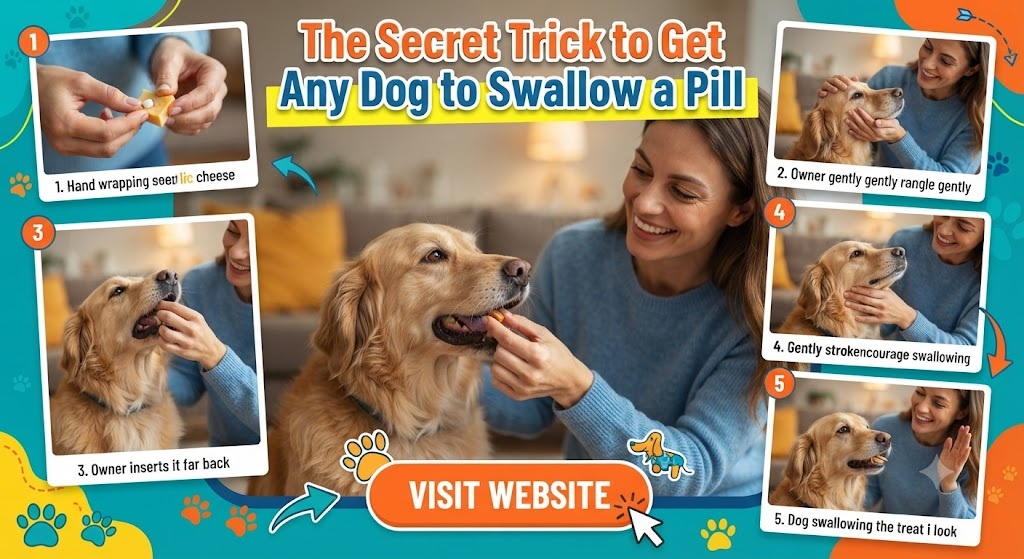
The “Three-Treat” Shuffle (The Shell Game)
This is perhaps the most effective trick in the book. If you give a dog one treat with a pill in it, they will chew it carefully. If you give them a sequence of treats, their “competitive eating” instinct kicks in.
- Treat One (The “Primer”): Give a plain, high-value treat (like a piece of cheese). This builds trust and gets the digestive enzymes flowing.
- Treat Two (The “Loaded” Treat): Give the treat containing the pill.
- Treat Three (The “Chaser”): The moment they take the loaded treat, immediately show them the third plain treat.
Because the dog wants the third treat, they are likely to swallow the second one (the pill) quickly without chewing to make room for the next one.
DIY Pill Pockets: Better Than Store-Bought
While commercial pill pockets are convenient, some dogs learn to eat the treat and spit out the pill. Making your own allows you to customize the size and scent.
The “Milk and Flour” Dough
Mix a tablespoon of peanut butter, a tablespoon of milk, and two tablespoons of flour (oat or wheat). Knead it into a dough. You can wrap small pieces of this dough around the pill. It’s bland enough not to upset their stomach but smells strongly of peanut butter.
The “Meatball” Strategy
If your dog is on a grain-free diet, use wet dog food or ground meat. Take a small amount of refrigerated wet food, place the pill in the center, and roll it into a firm ball. The cold temperature helps the ball stay together until it hits the back of the dog’s throat.
The Manual Method: When Food Isn’t an Option
Sometimes, a dog is too smart for food tricks, or they are on a restricted diet for surgery or allergies. In these cases, you must learn how to manually “pill” your dog safely and effectively.
Step-by-Step Manual Administration
Step 1: Preparation Lubricate the pill. A dry pill can get stuck in the esophagus, which is uncomfortable and potentially dangerous. Coat the pill in a tiny bit of butter, margarine, or olive oil to help it slide down easily.
Step 2: Positioning If you have a large dog, have them sit in a corner so they can’t back away. If you have a small dog, place them on a table or counter (with a non-slip mat) so you aren’t hovering over them, which can be intimidating.
Step 3: Opening the Mouth Place your non-dominant hand over the top of the dog’s muzzle. Gently press their lips over their upper teeth with your thumb on one side and your fingers on the other. This encourages them to open their mouth and protects your fingers (as they won’t want to bite their own lips).
Step 4: The Placement Hold the pill between the thumb and index finger of your dominant hand. Use your middle finger to gently pull down the lower jaw. Quickly place the pill as far back on the base of the tongue as possible. Aim for the very center; if it lands on the side, they can easily spit it out.
Step 5: The Swallow Close the dog’s mouth gently and hold it shut. Do not squeeze. Tilt their head slightly upward (not straight up at the ceiling, as this makes swallowing difficult).
Step 6: Stimulate the Reflex To encourage the dog to swallow:
- Gently rub their throat in a downward motion.
- Briefly blow a quick puff of air onto their nose.
- Lick their nose (or use a wet finger to touch their nose). When a dog licks their nose, they almost always swallow.
Step 7: Verify and Reward Watch for the “tongue flick.” When a dog swallows, they usually lick their nose immediately afterward. Once you see this, let go and offer a high-value treat and lots of praise.
Specialized Tools for Difficult Dogs
If the manual method feels too risky or your dog is prone to nipping, technology can help.
The Pill Popper (Pill Gun)
A pill popper is a plastic syringe-like device with a soft rubber tip that holds the pill. It allows you to place the medication at the back of the throat without putting your fingers in the dog’s mouth. This is excellent for aggressive dogs or very small dogs with tiny mouths.
Pill Crushers and Splitters
If the pill is too large, a splitter can help. However, never crush a pill or open a capsule without consulting your vet. Some medications are “extended-release” or have an “enteric coating” designed to dissolve in the intestines rather than the stomach. Crushing these can cause an overdose or make the medication ineffective.
Using a Syringe for Liquid Meds
If your dog absolutely refuses solids, ask your vet if the medication comes in a liquid form.
- The Cheek Pouch Technique: You don’t need to pry the mouth open for liquids. Simply slide the tip of the syringe into the “pocket” between the teeth and the cheek at the back of the mouth. Squirt the liquid slowly, allowing the dog to swallow naturally.
Long-Term Behavioral Training: “The Fake Pill”
If your dog requires lifelong medication, you should work on desensitization. The goal is to make “opening the mouth” a positive experience rather than a traumatic one.
1. Daily Mouth Handling
Spend a few minutes every day touching your dog’s muzzle, lifting their lips, and touching their teeth. Follow every touch with a high-value treat. This removes the “novelty” and fear of having their mouth handled.
2. The “Placebo” Drill
Practice the pill-giving routine using small pieces of kibble or “empty” pill pockets when the dog isn’t actually sick. If 9 out of 10 times the “procedure” results in just a tasty treat, they won’t fight you on the 10th time when it’s an actual pill.
3. “Hand-Fed” Meals
Start feeding your dog their meals one handful at a time. This builds a habit of the dog taking food directly from your hand without over-analyzing it.
Common Mistakes to Avoid
Even the most well-intentioned owners make mistakes that can set back their progress.
- Don’t “Hide” the Pill in Their Main Meal: If the dog finds the pill in their dinner, they may become suspicious of their food bowl entirely and stop eating. Always give medication separately from their primary meal.
- Don’t Play “Catch”: Tossing a pill for a dog to catch is risky. They might crunch it, taste the bitterness, and then you’ve lost the element of surprise for good.
- Avoid the “Medicine Scent”: After handling the pill, wash your hands before touching the “wrapper” food. If the outside of the treat smells like the pill, the dog will reject it before even tasting it.
- Don’t Give Up Too Soon: If the dog spits it out, stay calm. Take a break, wait 15 minutes for everyone to decompress, and try a different food vehicle.
When to Call the Vet: Alternatives and Compounding
If you have tried every trick and your dog is still refusing, or if the process is causing extreme stress or aggression, it’s time to talk to your veterinarian. You are not a failure; some dogs are simply more difficult than others.
Compounding Pharmacies
Ask your vet about a compounding pharmacy. These specialized pharmacies can turn standard pills into:
- Flavored Chews: Medications flavored like chicken, beef, or marshmallow.
- Transdermal Gels: Some medications can be absorbed through the skin (usually the inside of the ear).
- Highly Concentrated Liquids: Reducing the volume of liquid needed.
Injectable Alternatives
For certain conditions, there are long-acting injections (like Convenia for bacterial infections) that can last for up to two weeks, eliminating the need for daily pills entirely.
Troubleshooting Specific Scenarios
The “Spitter” (The Master of Disguise)
Some dogs are experts at holding a pill in their cheek for minutes, waiting for you to walk away, and then spitting it out behind the couch.
- Solution: After giving the pill, keep the dog in your sight for at least 5 minutes. Offer a “follow-up” drink of water or a small amount of wet food to ensure everything has moved down the esophagus.
The Aggressive Dog
If your dog snaps or growls during pill time, do not force the issue manually. Your safety is paramount.
- Solution: Stick exclusively to the “Trojan Horse” food methods or use a pill popper tool. If the dog is too aggressive to take medicated treats, consult a professional trainer or veterinary behaviorist.
The Sick Dog with No Appetite
This is the hardest scenario. If a dog isn’t interested in food, the Trojan Horse won’t work.
- Solution: This is where the manual method or liquid administration is necessary. If the dog is nauseous, ask your vet for an anti-nausea medication (like Cerenia) first. Once the nausea is under control, their appetite may return, making the primary medication easier to give.
Final Thoughts: Patience and Persistence
Giving a pill to a difficult dog is a skill that takes time to master. It requires a combination of creativity, calm energy, and sometimes a bit of culinary bribery. Remember that your dog isn’t trying to be “bad” or stubborn; they are simply following their instincts to avoid something that smells and tastes foreign.
By rotating your tactics, using high-value rewards like liverwurst or peanut butter, and practicing the “Three-Treat” shuffle, you can turn a stressful ordeal into a seamless part of your routine. Keep the atmosphere light, stay patient, and always end the session with a tail wag and a belly rub.
Medicating your dog is an act of love—and with these strategies, it doesn’t have to be a battle.