Easy chicken casserole: balsamic herb chicken with cauliflower
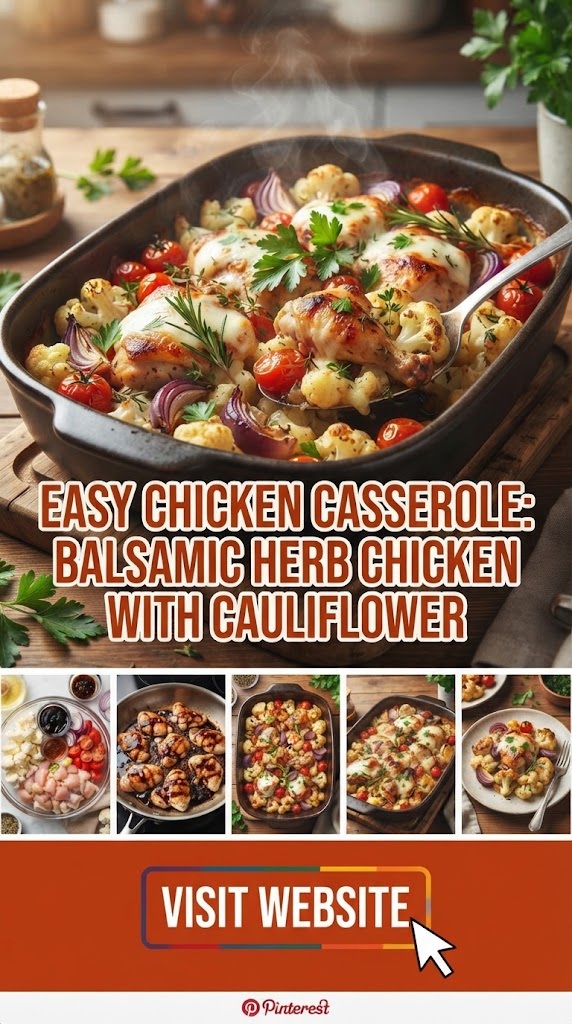
Easy Balsamic Herb Chicken Casserole with Cauliflower
This balsamic herb chicken and cauliflower casserole is an easy, comforting one-dish dinner with juicy chicken, tender roasted cauliflower, garlic, Italian herbs, and a rich, slightly sweet balsamic sauce. It is simple enough for a weeknight but flavorful enough for a family dinner.
Serves: 4–6
Prep time: 15 minutes
Marinating time: 20–30 minutes (optional)
Cook time: 40–50 minutes
Total time: About 1 hour 10 minutes
Oven: 200°C / 400°F
Ingredients
For the chicken and cauliflower
- 700 g boneless, skinless chicken breasts or chicken thighs
- 1 large head cauliflower, approximately 700–800 g, cut into bite-size florets
- 3 tablespoons olive oil, divided
- 4 cloves garlic, finely minced
- 1 teaspoon dried oregano
- 1 teaspoon dried thyme
- 1 teaspoon dried rosemary
- 1 teaspoon paprika
- 1 teaspoon salt, or to taste
- ½ teaspoon freshly ground black pepper
- ½ teaspoon onion powder
- ½ teaspoon chili flakes, optional
For the balsamic herb sauce
- ⅓ cup balsamic vinegar
- 2 tablespoons honey or maple syrup
- 1 tablespoon Dijon mustard
- 1 tablespoon olive oil
- 1 tablespoon fresh lemon juice
- ½ teaspoon dried oregano
- ½ teaspoon dried thyme
- 1 small garlic clove, finely minced
- ¼ teaspoon salt
- ¼ teaspoon black pepper
Optional finishing ingredients
- 30–40 g grated Parmesan cheese
- 2 tablespoons chopped fresh parsley
- 1 tablespoon chopped fresh basil
- A little lemon zest
- Extra balsamic glaze for drizzling
How to Make Balsamic Herb Chicken with Cauliflower
1. Prepare the chicken
Pat the chicken breasts or thighs thoroughly dry with paper towels. This helps the seasoning stick and encourages better browning.
If using thick chicken breasts, place them on a cutting board and carefully slice them horizontally into thinner pieces. Alternatively, gently pound them to an even thickness.
Season the chicken with:
- Salt
- Black pepper
- Paprika
- Onion powder
- Oregano
- Thyme
- Rosemary
Rub the seasonings over both sides of the chicken.
2. Make the balsamic marinade
In a bowl, whisk together the balsamic vinegar, honey, Dijon mustard, olive oil, lemon juice, minced garlic, oregano, thyme, salt, and black pepper.
The honey balances the sharpness of the balsamic vinegar, while Dijon mustard helps emulsify the sauce and gives the chicken extra flavor.
Pour approximately half of the mixture over the chicken and turn the chicken several times so it is evenly coated.
Allow it to sit for 20–30 minutes in the refrigerator.
Important: Keep the remaining sauce separate. Do not use sauce that has been in contact with raw chicken unless you cook it thoroughly.
3. Prepare the cauliflower
Heat the oven to 200°C / 400°F.
Wash the cauliflower and cut it into relatively small, evenly sized florets. Try not to make the pieces too large because they need to become tender at approximately the same time as the chicken.
Place the cauliflower into a large bowl.
Add:
- 1½ tablespoons olive oil
- A pinch of salt
- Black pepper
- The minced garlic
- A little oregano and thyme
Toss thoroughly until the cauliflower is coated.
4. Assemble the casserole
Lightly grease a large baking dish, approximately 23 × 33 cm (9 × 13 inches).
Spread the seasoned cauliflower evenly across the bottom.
Arrange the marinated chicken pieces over the cauliflower.
Pour the reserved, unused balsamic sauce over the chicken and cauliflower.
Try to distribute it evenly rather than pouring everything into one spot.
5. Bake
Place the casserole in the preheated oven.
Bake uncovered for approximately 35–45 minutes, depending on the thickness of the chicken.
Halfway through cooking, carefully remove the dish and gently toss or turn some of the cauliflower so it cooks evenly.
Return the casserole to the oven.
The exact cooking time will depend on whether you use chicken breasts or thighs and how thick the pieces are.
Most important: check the chicken
The chicken should reach an internal temperature of 74°C / 165°F at the thickest part.
A meat thermometer is the most reliable way to check.
Do not rely solely on cooking time because chicken pieces can vary considerably in size.
6. Add Parmesan for a golden topping
If you want a richer casserole, sprinkle 30–40 g Parmesan cheese over the chicken and cauliflower during the final 5–8 minutes of baking.
For an especially golden top, switch the oven to the grill/broiler setting for the final 1–2 minutes.
Watch it closely because Parmesan can brown quickly.
7. Rest the casserole
Remove the casserole from the oven and allow it to rest for approximately 5–10 minutes.
This gives the chicken time to retain more of its juices and allows the balsamic sauce to settle into the cauliflower.
Finish with freshly chopped parsley or basil.
A little fresh lemon zest also works beautifully.
What the Finished Dish Should Look Like
The chicken should be tender and juicy, with a dark golden-brown balsamic coating.
The cauliflower should be:
- Tender in the center
- Slightly browned around the edges
- Coated in the sweet-tangy balsamic sauce
- Fragrant with garlic and herbs
The sauce should be concentrated rather than watery. During baking, the balsamic vinegar reduces and combines with the chicken juices, olive oil, garlic, herbs, mustard, and honey.
Tips for the Best Balsamic Chicken Casserole
Use chicken thighs for extra juiciness
Boneless, skinless chicken thighs are more forgiving than chicken breasts and are less likely to become dry if slightly overcooked.
Chicken breasts work very well too, but avoid cutting them into extremely thin pieces or baking them much longer than necessary.
Don’t overcrowd the cauliflower
If the cauliflower is packed tightly into a small dish, it will release steam and become soft rather than nicely roasted.
Use a large casserole dish so the vegetables have some space.
Cut cauliflower evenly
Large pieces will remain firm while small pieces can become very soft. Similar-sized florets produce a much more consistent result.
Don’t overdo the balsamic vinegar
Balsamic vinegar becomes more intense as it reduces. The honey and Dijon mustard help balance it, but using substantially more vinegar can make the finished casserole excessively acidic.
Let the chicken rest
Even a five-minute rest makes a noticeable difference to the texture of chicken breast.
Easy Variations
Balsamic chicken with vegetables
You can add vegetables such as:
- Bell peppers
- Red onion
- Zucchini
- Mushrooms
- Cherry tomatoes
- Broccoli
Harder vegetables such as carrots should be cut relatively small so they have enough time to cook.
Creamy version
For a creamy casserole, stir ½ cup heavy cream or cooking cream into the sauce before baking. Reduce the balsamic vinegar slightly if you prefer a milder flavor.
Cheesy version
Add shredded mozzarella during the last 8–10 minutes of baking and Parmesan during the final few minutes.
Spicy version
Add:
- ½–1 teaspoon chili flakes
- ½ teaspoon cayenne pepper
- A little hot sauce
Mediterranean version
Add cherry tomatoes, olives, red onion, oregano, and crumbled feta after baking.
What to Serve With It
Because the casserole already contains chicken and cauliflower, it can be served as a complete meal.
For a heartier dinner, serve it with:
- Steamed or roasted rice
- Mashed potatoes
- Crusty bread
- Quinoa
- Couscous
- A simple green salad
A fresh salad with cucumber, lettuce, tomatoes, and lemon dressing provides a nice contrast to the rich balsamic sauce.
Storage and Reheating
Allow leftovers to cool and place them in an airtight container.
Refrigerate for up to 3–4 days.
To reheat, place a portion in a covered oven-safe dish and heat at approximately 175°C / 350°F until thoroughly hot.
You can also reheat it in the microwave in short intervals, stirring or turning the cauliflower between intervals.
For best texture, add a small splash of water or chicken stock before reheating if the casserole has become dry.
Quick Recipe Summary
Season chicken → make balsamic sauce → marinate chicken → season cauliflower → arrange everything in a casserole dish → bake at 200°C/400°F → check chicken reaches 74°C/165°F → optionally add Parmesan → rest 5–10 minutes → garnish and serve.
The result is a simple, savory-sweet balsamic herb chicken casserole with tender cauliflower, garlic, herbs, and caramelized edges—a particularly good option when you want a flavorful dinner without preparing several separate dishes.