Why Does My Dog Have Dandruff?
The Flaky Truth: Why Does My Dog Have Dandruff and How Can I Fix It?
Finding a “snowstorm” of white flakes on your dog’s back after a good petting session can be alarming. While we often associate dandruff with human hair care commercials, canine dandruff—medically known as seborrhea—is an incredibly common issue that affects millions of dogs worldwide.
Dandruff isn’t just a cosmetic nuisance; it is often a “canary in the coal mine” for your dog’s overall health. It can indicate anything from a simple change in the weather to more complex internal medical issues. In this comprehensive guide, we will dive deep into the biology of dog skin, explore the various causes of flakiness, and provide actionable solutions to restore your pup’s coat to its glossy, healthy glory.
What Exactly is Dog Dandruff?
To understand why your dog is flaky, we first need to understand how their skin works. Like humans, a dog’s skin is a living, breathing organ—the largest one they have. It is constantly regenerating. New skin cells are born in the deeper layers and migrate toward the surface. As they move up, they toughen and eventually die, sloughing off to make room for new growth.
Under normal circumstances, this process is invisible. However, when the skin’s turnover process is disrupted or accelerated, these dead skin cells clump together with oils and fall off in visible white flakes. This is what we call dandruff.
The Two Faces of Seborrhea
In the veterinary world, dandruff is categorized into two types:
- Seborrhea Sicca (Dry Seborrhea): This is the most common form, characterized by dry, white flakes and a dull coat.
- Seborrhea Oleosa (Oily Seborrhea): This involves an overproduction of sebum (skin oil). You’ll notice greasy, yellowish flakes, a “doggy” odor, and a coat that feels oily to the touch.
Most dogs suffer from a combination of both, leading to a cycle of itching, flaking, and discomfort.
The Primary Culprits: Why Does It Happen?
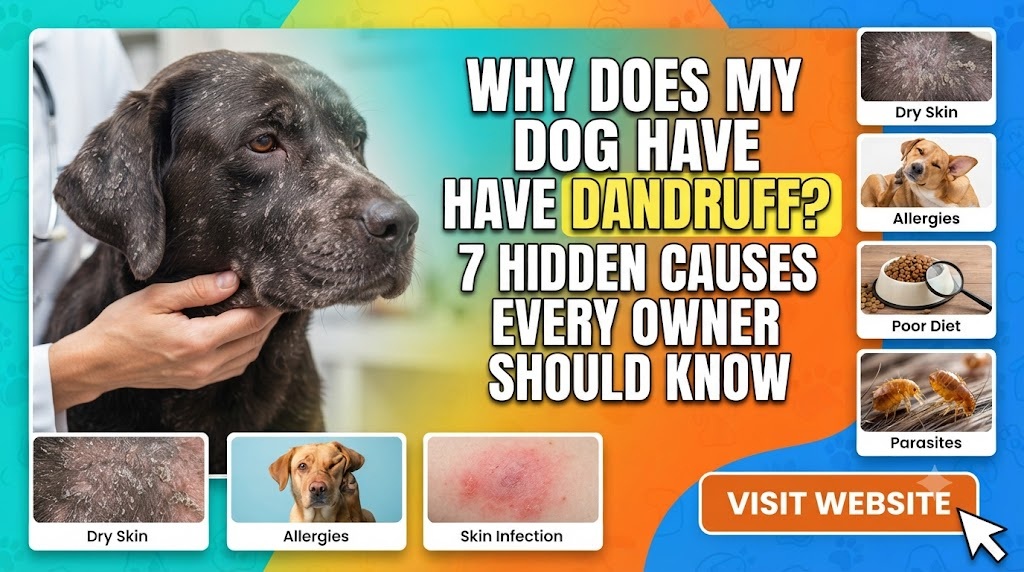
If you’re asking “Why does my dog have dandruff?”, the answer usually falls into one of several categories. Identifying the root cause is the first step toward a cure.
1. Low Humidity and Environmental Factors
Just like humans get “winter itch,” dogs are highly susceptible to dry air.
- The Winter Effect: When the temperature drops, we turn on the central heating. This saps the moisture out of the air and, consequently, your dog’s skin.
- Seasonal Changes: Sudden shifts in humidity during spring or autumn can trigger a “shedding” of skin cells alongside the shedding of fur.
2. Nutritional Deficiencies
Your dog’s coat is a direct reflection of what they eat. Skin and hair consume up to 25% to 30% of a dog’s daily protein intake. If their diet is lacking, the skin is usually the first place to show signs of neglect.
- Lack of Omega-3 Fatty Acids: Essential fatty acids (EFAs) like EPA and DHA are the “glue” that holds skin cells together and keeps moisture in.
- Poor Quality Protein: Cheap fillers in budget dog food often lack the amino acids necessary for healthy skin regeneration.
- Vitamin A and Zinc: These specific micronutrients play a vital role in the keratinization process of the skin.
3. Grooming Habits (The Goldilocks Dilemma)
Grooming is essential, but there is such a thing as “too much of a good thing.”
- Over-Bathing: Washing your dog too frequently strips away the natural oils that protect the skin barrier. This leads to compensatory flaking.
- Using Human Shampoo: This is a major culprit. Human skin has a pH of about 5.5 (acidic), while dog skin is more neutral (around 6.2 to 7.5). Using human products disrupts the “acid mantle” of the dog’s skin, leaving it vulnerable to bacteria and dryness.
- Under-Grooming: On the flip side, not brushing your dog allows dead hair and skin to build up, creating a breeding ground for flakes and mats.
4. Parasites: The “Walking Dandruff”
There is a specific parasite called Cheyletiella mites. These mites are large enough to be seen with the naked eye, and as they move under the scales of the skin, they make the dandruff look like it’s moving. This is literally called “walking dandruff.” Additionally, flea allergy dermatitis can cause a dog to scratch so much that they create secondary dandruff and scabs.
5. Underlying Medical Conditions
Sometimes, dandruff is a symptom of a systemic issue:
- Hypothyroidism: An underactive thyroid gland slows down the body’s metabolism, including skin cell turnover, leading to a dry, brittle coat and heavy scaling.
- Cushing’s Disease: An overproduction of cortisol can thin the skin and lead to various dermatological issues.
- Autoimmune Diseases: Conditions like Pemphigus can cause severe crusting and scaling.
6. Allergies
Allergies are one of the most common reasons for skin issues in dogs.
- Food Allergies: Common triggers include beef, dairy, wheat, or chicken.
- Environmental Allergies (Atopy): Pollen, mold, and dust mites can cause the skin to become inflamed and flaky.
Breed Predispositions: Is Your Dog at Risk?
While any dog can get dandruff, some breeds are genetically predisposed to primary seborrhea, a condition where the skin cells regenerate every few days instead of the standard 21-day cycle.
- West Highland White Terriers: Prone to oily seborrhea and yeast infections.
- American Cocker Spaniels: Often suffer from severe Vitamin A-responsive dermatosis.
- Golden Retrievers and Labradors: Known for having “thick” coats that trap moisture and lead to oily dandruff.
- Doberman Pinschers: Often suffer from dry, flaky skin due to their short, single coats.
- Basset Hounds: Their skin folds can trap oils, leading to localized seborrhea oleosa.
Symptoms to Watch For (Beyond the Flakes)
Dandruff rarely travels alone. If you notice the following symptoms alongside the white flakes, it’s time to take a closer look:
- Pruritus (Itching): Is your dog constantly scratching or biting at their skin?
- Alopecia (Hair Loss): Are there bald patches appearing?
- Erythema (Redness): Does the skin look inflamed or pink?
- Odor: Is there a “musty” or “yeasty” smell coming from the coat?
- Scabs and Crusts: These can indicate a secondary bacterial infection (Pyoderma).
How to Treat Dog Dandruff: A Multi-Step Approach
Treating dandruff requires a “holistic” approach—meaning you need to treat the dog from the inside out and the outside in.
Step 1: Improve the Diet
The foundation of healthy skin is a high-quality diet.
- Omega Supplements: Add a high-quality fish oil (salmon, anchovy, or krill) to your dog’s meals. Look for products with high levels of EPA and DHA.
- Switch to Limited Ingredient Diets: If you suspect allergies, try a “novel protein” diet (like venison or duck) to see if the skin clears up.
- Hydration: Ensure your dog has constant access to fresh water. Dehydration leads to dry skin.
Step 2: Proper Grooming Protocol
- The Right Shampoo: Use a soap-free, pH-balanced dog shampoo. For dry dandruff, look for ingredients like oatmeal, aloe vera, and urea. For oily dandruff, look for salicylic acid, benzoyl peroxide, or sulfur.
- The “Leave-On” Rule: When using a medicated shampoo, you must leave it on the skin for at least 10 minutes before rinsing. This allows the active ingredients to penetrate the skin layers.
- Regular Brushing: Brushing your dog for 5-10 minutes every day distributes the natural oils (sebum) across the hair shaft and removes dead skin cells before they clump into dandruff.
Step 3: Manage the Environment
- Humidifiers: If you live in a dry climate or have the heater on, run a humidifier in the room where your dog sleeps.
- Coconut Oil: For localized dry spots (like the elbows or the base of the tail), you can rub a small amount of organic, virgin coconut oil directly onto the skin. It acts as a natural moisturizer and has mild antibacterial properties.
Step 4: Veterinary Intervention
If home remedies don’t show results within 2–3 weeks, you must see a vet. They may perform:
- Skin Scrapings: To look for mites or parasites.
- Cytology: To check for yeast or bacterial overgrowth.
- Blood Tests: To rule out thyroid issues or organ dysfunction.
Natural Home Remedies for Dog Dandruff
If you prefer a more natural route for mild cases, these kitchen-cupboard remedies can provide relief:
1. The Apple Cider Vinegar Rinse
Mix a solution of 50% water and 50% organic Apple Cider Vinegar. After a bath, spray this onto your dog’s coat (avoiding the eyes and any open cuts). ACV helps restore the skin’s natural pH and kills mild yeast.
2. Oatmeal Soaks
Grind plain, unflavored oats into a fine powder and mix into a warm bath. Let your dog soak for 15 minutes. Oatmeal contains avenanthramides, which are potent anti-inflammatory agents that soothe itchy, flaky skin.
3. Vitamin E Massage
Break open a Vitamin E capsule and massage the oil directly onto particularly dry or flaky patches. It’s a powerful antioxidant that helps repair skin tissue.
Prevention: Keeping the Flakes Away for Good
Once you’ve cleared up the dandruff, the goal is to make sure it never comes back.
- Monthly Maintenance Baths: Even if your dog doesn’t look dirty, a monthly bath with a moisturizing conditioner helps maintain the skin barrier.
- Year-Round Parasite Prevention: Use a vet-recommended flea and tick preventative every single month. One flea bite can trigger a massive inflammatory response in sensitive dogs.
- Routine Bloodwork: During your annual vet visit, ask for a “senior” or “wellness” panel that includes thyroid testing, especially if your dog is over the age of five.
- Watch the Treats: Many commercial dog treats are loaded with sugar and artificial dyes that can trigger skin inflammation. Stick to single-ingredient treats like dehydrated sweet potato or freeze-dried liver.
The Link Between Stress and Dandruff
Believe it or not, dogs can get “stress dandruff.” Have you ever noticed that when your dog goes to the vet or the groomer, they suddenly seem to be covered in white flakes within minutes?
This is known as Physiologic Seborrhea. When a dog is stressed, their capillaries constrict, and the skin can react by shedding the topmost layer of cells almost instantly. If your dog’s dandruff only appears during high-stress events, the solution isn’t medicated shampoo—it’s anxiety management.
Frequently Asked Questions (FAQ)
Is dog dandruff contagious to humans?
Regular dandruff caused by dry skin or allergies is not contagious. However, if the dandruff is caused by Cheyletiella mites (Walking Dandruff) or Sarcoptic Mange, these parasites can temporarily jump to humans and cause a localized itchy rash.
Can I use Head & Shoulders on my dog?
No. While it might be tempting, Head & Shoulders contains zinc pyrithione and other chemicals at concentrations designed for human skin pH. It can be too harsh for a dog and may cause further irritation or chemical burns if used repeatedly.
How often should I brush my dog to prevent dandruff?
For most dogs, brushing 3 to 4 times a week is sufficient. For long-haired or double-coated breeds (like Huskies or Collies), daily brushing is recommended to ensure air can circulate to the skin surface.
Why does my dog’s dandruff smell like corn chips?
That “Frito” smell is usually a sign of a yeast overgrowth (Malassezia). Yeast thrives in moist, oily environments. If the dandruff is accompanied by this smell, you likely need an antifungal shampoo prescribed by a vet.
Final Thoughts: A Flake-Free Future
Dog dandruff is rarely a “one-and-done” fix. It requires a commitment to quality nutrition, a consistent grooming schedule, and a keen eye for changes in your dog’s behavior and coat quality.
By identifying whether your dog is suffering from dry or oily seborrhea and addressing the environmental and nutritional factors, you can stop the itching and start the healing. Your dog spends their whole life in their skin; making sure they are comfortable in it is one of the greatest acts of love you can provide.
Remember, if the flaking is severe, accompanied by a foul odor, or if your dog seems in pain, consult your veterinarian immediately. A healthy coat is a sign of a happy, healthy dog!
SEO Keywords: dog dandruff causes, how to get rid of dog dandruff, canine seborrhea, dry skin on dogs, dog dandruff home remedies, walking dandruff in dogs, best dog shampoo for dandruff, omega-3 for dog skin, dog itching and flaking.